Xiaomi has a lot of (far too many) smartphones in its 2023 catalog. There are its sub-brands Redmi and Poco, where each has a respective entry-level, mid-range, and high-end models to choose from. With such a wide selection, we help you choose the best Xiaomi, Redmi, or Poco smartphone.
For the sake of completeness, it should be mentioned that Xiaomi has already introduced the Xiaomi 14 and Xiaomi 14 Pro in China. The first smartphones that rely on HyperOS instead of MIUI will not make it to the West until next spring. As soon as we can see for ourselves what the devices are capable of, we will of course include them in our article here, we promise!
Attention: Xiaomi does not officially import the following devices to the United States. The prices mentioned in the article are approximate conversions of the MSRP and they may not reflect the market price in the US. All the affiliate links included are from third-party sellers and may not represent the MSRP. The devices may not include a warranty or support to your carrier.
Recommended Xiaomi smartphones by nextpit in 2023
Listed here are the Xiaomi, Poco, and Redmi smartphones that the nextpit editorial staff has recommended. For each price range from $200 all the way to a lofty $1,000, we put our best choice forward.
The best choice in 2023: Xiaomi 13T Pro
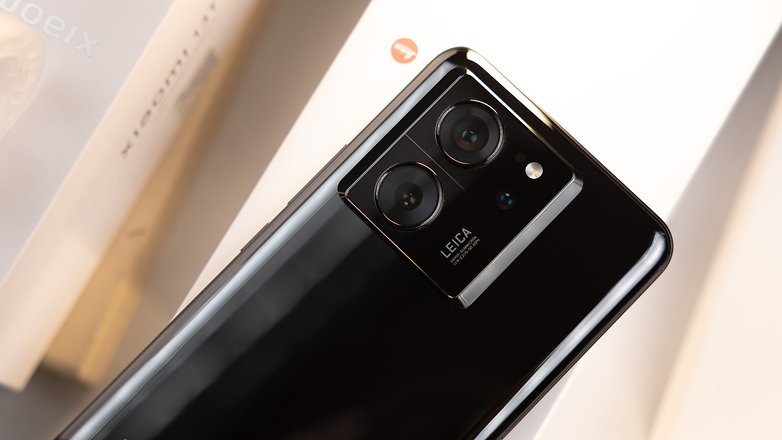
Check out nextpit’s review of the Xiaomi 13T Pro
We have been thinking for a while about which smartphone to recommend to you as an editorial tip. Both the Xiaomi 13 Pro (review) and the brand-new Xiaomi 13T Pro have their merits—and we have now decided on the newcomer.
The 6.67-inch AMOLED display repeats pictures with a sporty 144 Hz. Xiaomi also relies on MediaTek instead of Qualcomm and uses the speedy MediaTek Dimensity 9200+, which you can combine with 12 or 16 GB and up to 1 TB of storage depending on the configuration.
For the first time, Xiaomi installed a Leica triple camera, which is convincing in most cases. A 5,000 mAh battery is also on board, which a) charges very quickly with 120 W and b) whose charger is also included. MIUI 14 based on Android 13 is installed and—apart from annoying bloatware—is also convincing. By the way, Xiaomi has increased the software support to four years for system updates. Security updates are still available for five years.
Looking at the spec sheet, we can see that Xiaomi’s 13 Pro and 13 Ultra are better equipped in a few areas. However, we still recommend the Xiaomi 13T Pro because the price starts at 799 Euros (approx $850) and even the largest version with 1 TB storage and 16 GB RAM only costs 999 Euros (approx $1060).
The high-end alternative 2023: The Xiaomi 13

Check out the review of the Xiaomi 13
Want to save a bit on price, but still craving a high-end smartphone from Xiaomi? Here you go, here is the Xiaomi 13! The AMOLED screen of 6.36″ is smaller than that of the big brother, but it is still convincing all along the line. Matt also has only positive things to say about the triple-cam after his review, even though it is not quite on the same level as the Pro model.
Like the Pro, the Xiaomi 13 is powered by the Snapdragon 8 Gen 2 and is also available in storage variants up to 512 GB. The battery of 4,500 mAh is a bit smaller than in the Pro, and the charging speed is also lower at 67 watts. However, most people won’t even notice the difference, especially considering the savings.
The true flagship experience: Xiaomi 13 Ultra
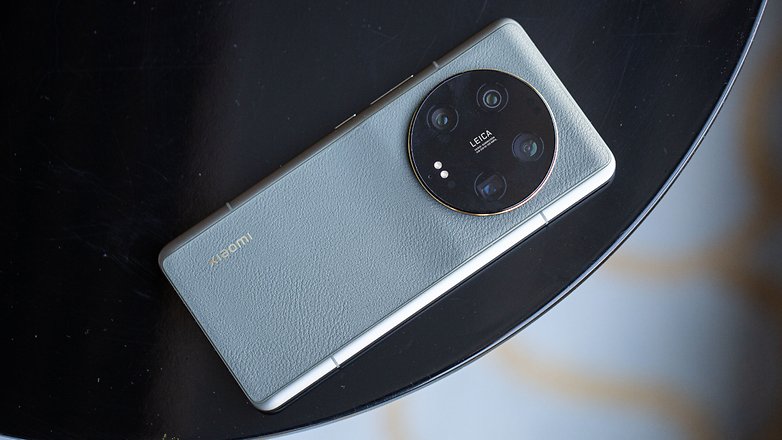
Read the Xiaomi 13 Ultra review
Xiaomi 13 and 13 Pro not fancy enough for you? No worries! The Chinese manufacturer has launched the Xiaomi 13 Ultra, its new ultra-premium smartphone that will top its lineup for 2023.
This more muscular version of the Xiaomi 13 Pro with which it shares some characteristics, is thought for those who want to have the top of the top. Compared to the Xiaomi 13 Pro, it stands out for its more worked and massive design, its much brighter 2K screen with its 2600 Nits of peak luminosity, its 16 GB of RAM and the storage that goes up to 1 TB or its 5000 mAh battery.
The Xiaomi 13 Ultra is especially impressive when it comes to the camera module, with its quadruple camera module consisting of a 50 MP main lens with a 1-inch sensor, its 50 MP ultra-wide angle lens and its two 50 MP telephoto lenses with focal lengths of 75 and 120 mm respectively.